

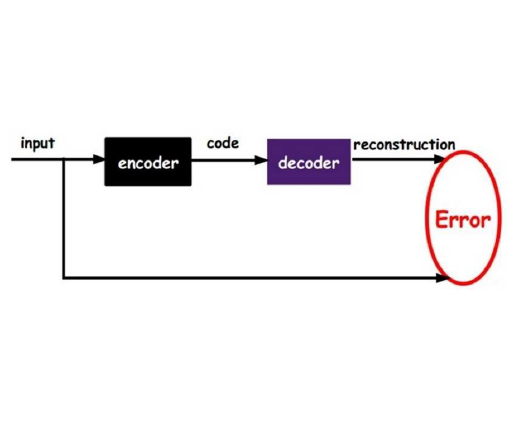
In recent years, machine learning and deep learning have driven advances in domains such as image classification, speech recognition, and anomaly detection by leveraging multi-layer neural networks to model complex data. Simultaneously, quantum computing (QC) promises to address classically intractable problems via quantum parallelism, motivating research in quantum machine learning (QML). Among QML techniques, quantum autoencoders show promise for compressing high-dimensional quantum and classical data. However, designing effective quantum circuit architectures for quantum autoencoders remains challenging due to the complexity of selecting gates, arranging circuit layers, and tuning parameters. This paper proposes a neural architecture search (NAS) framework that automates the design of quantum autoencoders using a genetic algorithm (GA). By systematically evolving variational quantum circuit (VQC) configurations, our method seeks to identify high-performing hybrid quantum-classical autoencoders for data reconstruction without becoming trapped in local minima. We demonstrate effectiveness on image datasets, highlighting the potential of quantum autoencoders for efficient feature extraction within a noise-prone, near-term quantum era. Our approach lays a foundation for broader application of genetic algorithms to quantum architecture search, aiming for a robust, automated method that can adapt to varied data and hardware constraints.
翻译:近年来,机器学习和深度学习通过利用多层神经网络建模复杂数据,推动了图像分类、语音识别和异常检测等领域的进步。与此同时,量子计算(QC)有望通过量子并行性解决经典计算难以处理的问题,从而推动了量子机器学习(QML)的研究。在QML技术中,量子自编码器在压缩高维量子与经典数据方面展现出潜力。然而,由于门选择、电路层排列和参数调优的复杂性,设计有效的量子自编码器电路架构仍具挑战性。本文提出了一种神经架构搜索(NAS)框架,利用遗传算法(GA)自动化设计量子自编码器。通过系统演化变分量子电路(VQC)配置,我们的方法旨在识别高性能的混合量子-经典自编码器,以实现数据重构,同时避免陷入局部最优解。我们在图像数据集上验证了其有效性,突显了量子自编码器在噪声易发的近期量子时代中实现高效特征提取的潜力。该方法为遗传算法在量子架构搜索中的更广泛应用奠定了基础,旨在发展一种能够适应多样化数据与硬件约束的鲁棒自动化方法。




相关内容


 微信扫码咨询专知VIP会员