

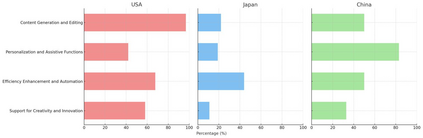
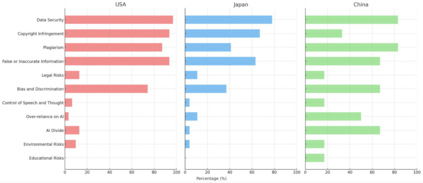
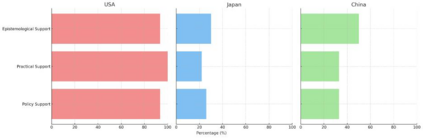
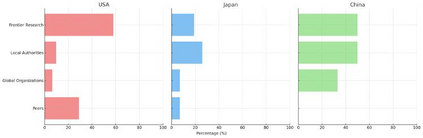
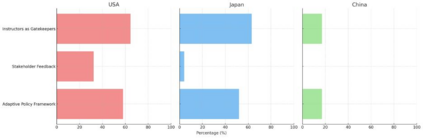
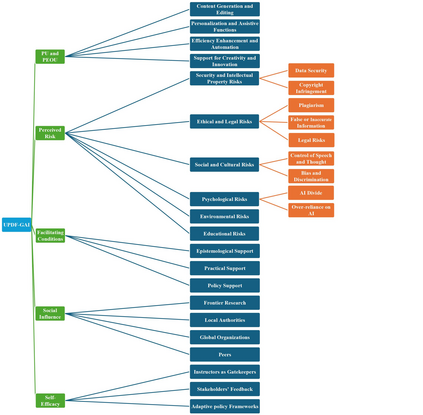
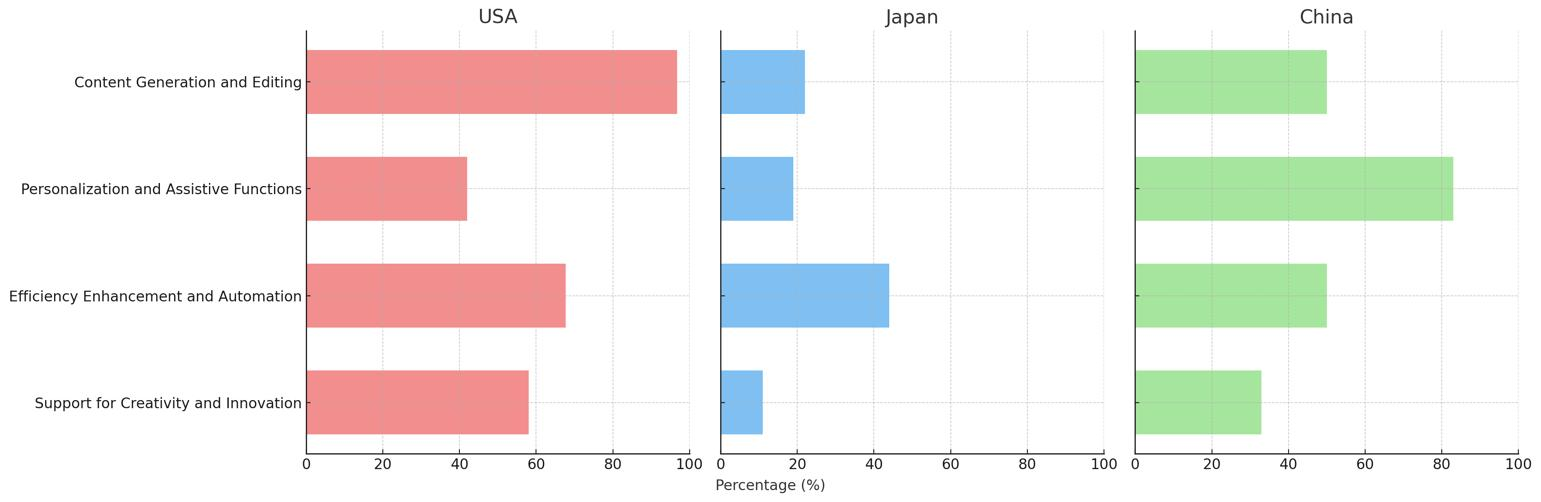
As generative artificial intelligence (GAI) becomes more integrated into higher education and research, universities adopt varied approaches to GAI policy development. To explore these variations, this study conducts a comparative analysis of leading universities in the United States, Japan, and China, examining their institution-wide policies on GAI application and governance. Based on these findings, the study proposes a University Policy Development Framework for GAI (UPDF-GAI) to provide both theoretical insights and practical guidance for universities in developing and refining their GAI policies. A qualitative content analysis of 124 policy documents from 110 universities was conducted, employing thematic coding to synthesize 20 key themes and 9 sub-themes. These themes and sub-themes formed the basis for developing the framework. The analysis reveals varying priorities and focus of GAI policy of universities in different countries. U.S. universities emphasize faculty autonomy, practical application, and policy adaptability, shaped by cutting-edge research and peer collaboration. Japanese universities take a government-regulated approach, prioritizing ethics and risk management, but provide limited support for AI implementation and flexibility. Chinese universities follow a centralized, government-led model, focusing on technology application over early policy development, while actively exploring GAI integration in education and research. The UPDF-GAI framework offers a systematic, adaptable framework for assessing and optimizing GAI policies across different educational contexts. By identifying key policy characteristics, enhancing policy effectiveness, and balancing technology, ethics, and education, enabling universities to develop sustainable, contextually relevant policies that strengthen their digital competitiveness and institutional readiness for AI-driven education.
翻译:暂无翻译




相关内容



 微信扫码咨询专知VIP会员