

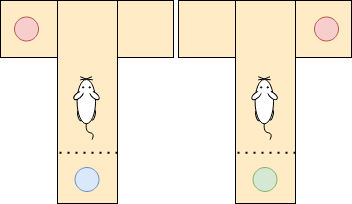
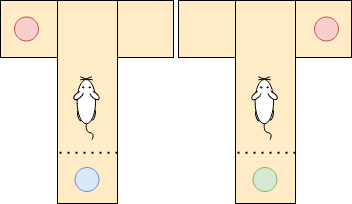
Historically, artificial intelligence has drawn much inspiration from neuroscience to fuel advances in the field. However, current progress in reinforcement learning is largely focused on benchmark problems that fail to capture many of the aspects that are of interest in neuroscience today. We illustrate this point by extending a T-maze task from neuroscience for use with reinforcement learning algorithms, and show that state-of-the-art algorithms are not capable of solving this problem. Finally, we point out where insights from neuroscience could help explain some of the issues encountered.
翻译:从历史上看,人工智能从神经科学中得到了许多启发,从而推动了该领域的进步。然而,目前强化学习的进展主要集中在基准问题上,这些问题未能抓住当今神经科学中许多值得关注的方面。 我们通过扩展神经科学中的T-Mazez任务,将其用于强化学习算法来说明这一点,并表明最先进的算法无法解决这一问题。 最后,我们指出神经科学的洞察力可以帮助解释遇到的一些问题。






相关内容



 微信扫码咨询专知VIP会员