

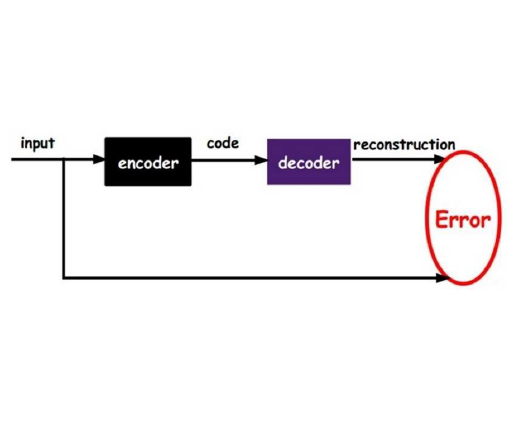
Anomalies (or outliers) are prevalent in real-world empirical observations and potentially mask important underlying structures. Accurate identification of anomalous samples is crucial for the success of downstream data analysis tasks. To automatically identify anomalies, we propose Probabilistic Robust AutoEncoder (PRAE). PRAE aims to simultaneously remove outliers and identify a low-dimensional representation for the inlier samples. We first present the Robust AutoEncoder (RAE) objective as a minimization problem for splitting the data into inliers and outliers. Our objective is designed to exclude outliers while including a subset of samples (inliers) that can be effectively reconstructed using an AutoEncoder (AE). RAE minimizes the autoencoder's reconstruction error while incorporating as many samples as possible. This could be formulated via regularization by subtracting an $\ell_0$ norm counting the number of selected samples from the reconstruction term. Unfortunately, this leads to an intractable combinatorial problem. Therefore, we propose two probabilistic relaxations of RAE, which are differentiable and alleviate the need for a combinatorial search. We prove that the solution to the PRAE problem is equivalent to the solution of RAE. We use synthetic data to show that PRAE can accurately remove outliers in a wide range of contamination levels. Finally, we demonstrate that using PRAE for anomaly detection leads to state-of-the-art results on various benchmark datasets.
翻译:异常点( 或异常点) 在现实世界的实证观测中十分普遍, 并有可能掩盖重要的基本结构。 准确识别异常点对于下游数据分析任务的成功至关重要 。 为了自动识别异常点, 我们提议对异常点进行概率化的机械自动编码器( PRAE ) 。 PRAE 的目标是同时清除离点, 并为离点样本确定一个低维代表。 我们首先将强势自动编码器( RAE ) 目标作为将数据分解为内层和外部层的最小化问题。 因此, 我们的目标是排除异常点样本, 同时包括一组可以使用自动编码器( AE) 有效重建的样本( Iirs ) 。 RAE 将自动编码器的重建错误最小化, 并尽可能多地包含样本。 这可以通过减少一个$/ ell_ 0 标准来规范来规范内标数重建期中选定样本的数量。 不幸的是, 这会导致一个棘手的组合问题。 因此, 我们提议在 RAE( RAE) 上进行两次稳定度调试样的解,, 将最终显示一个解解算出一个可以解到 的解到 数据。




相关内容


 微信扫码咨询专知VIP会员