

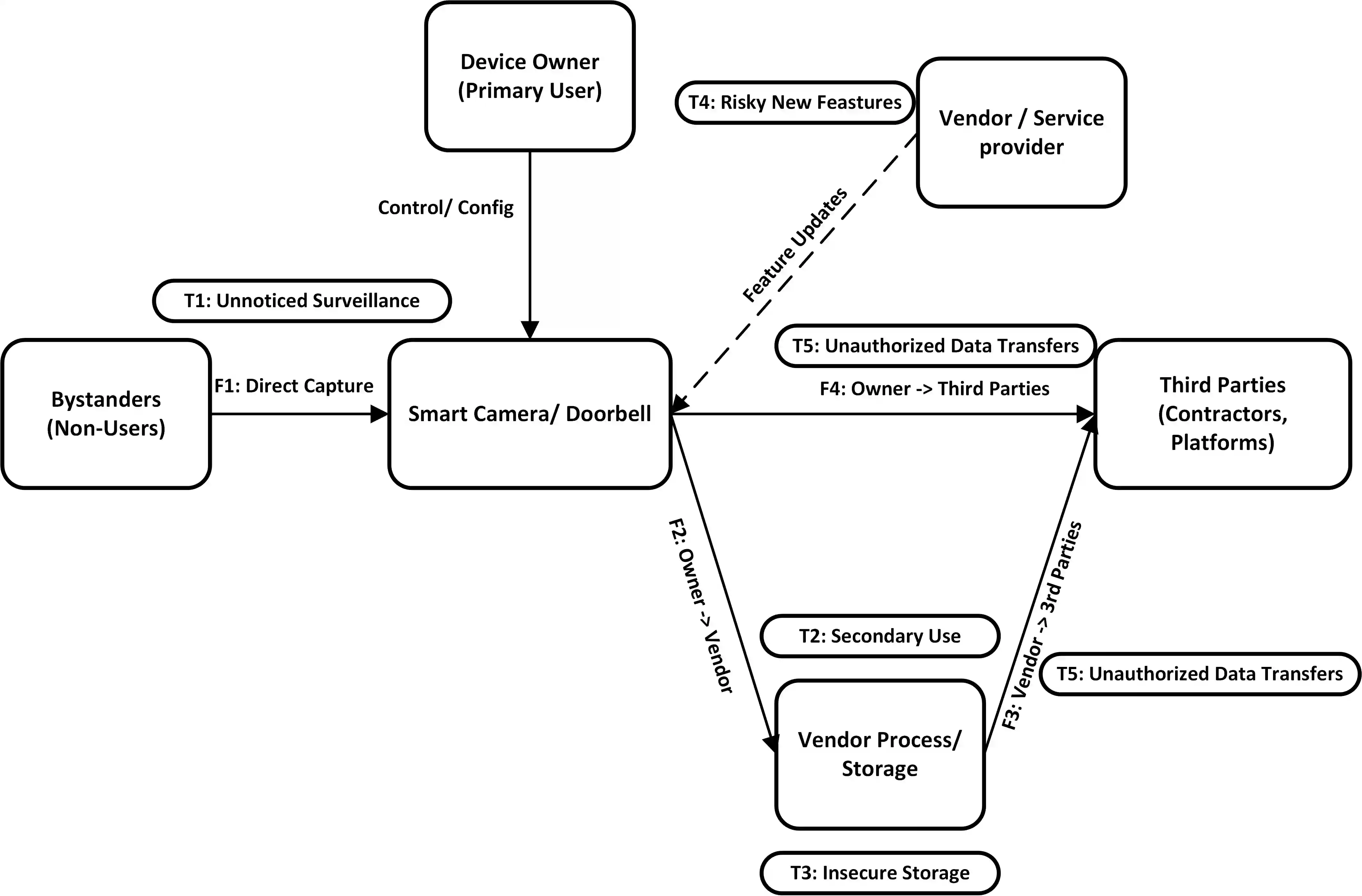
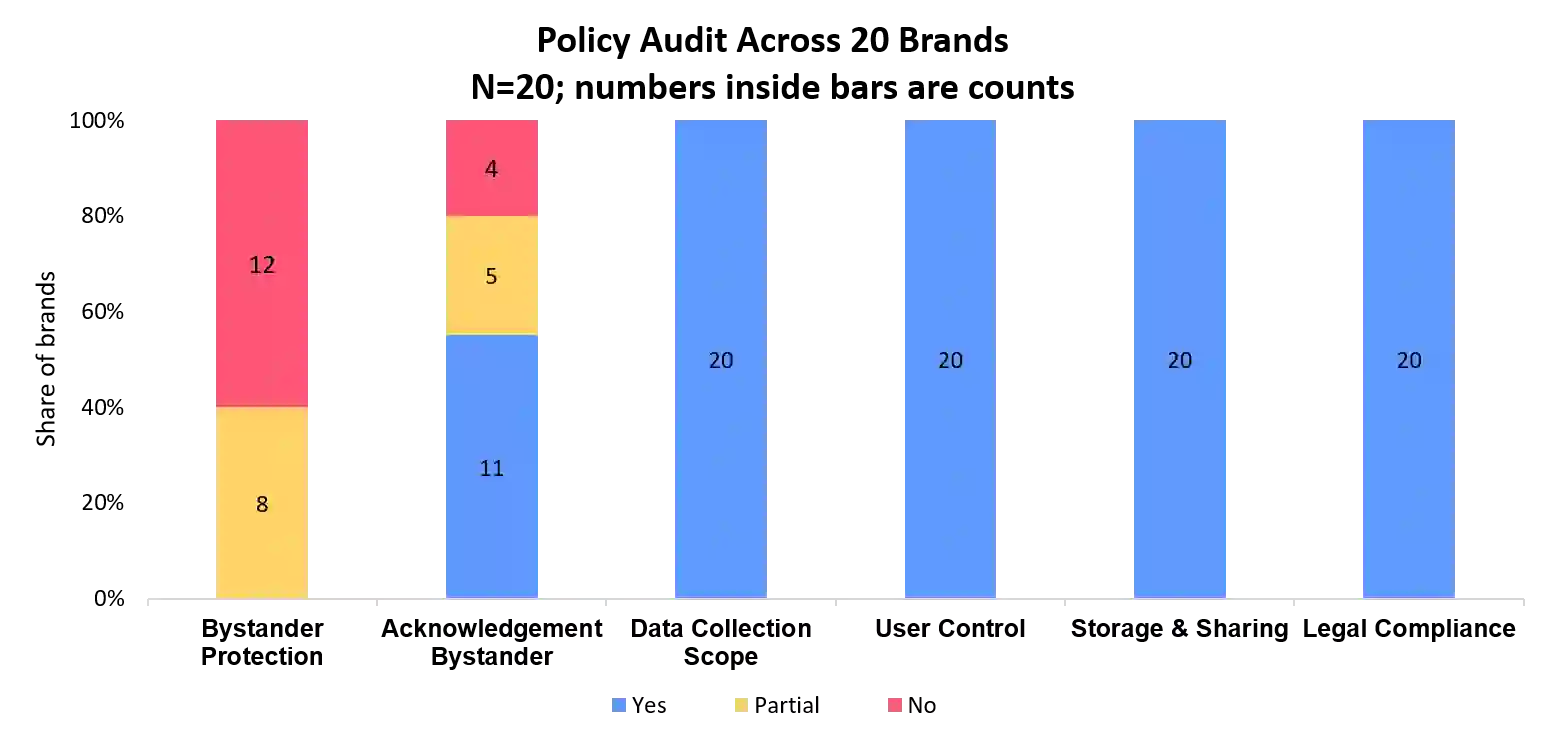
Smart home devices such as video doorbells and security cameras are becoming increasingly common in everyday life. While these devices offer convenience and safety, they also raise new privacy concerns: how these devices affect others, like neighbors, visitors, or people passing by. This issue is generally known as interdependent privacy, where one person's actions (or inaction) may impact the privacy of others, and, specifically, bystander privacy in the context of smart homes. Given lax data protection regulations in terms of shared physical spaces and amateur joint data controllers, we expect that the privacy policies of smart home products reflect the missing regulatory incentives. This paper presents a focused privacy policy analysis of 20 video doorbell and smart camera products, concentrating explicitly on the bystander aspect. We show that although some of the vendors acknowledge bystanders, they address it only to the extent of including disclaimers, shifting the ethical responsibility for collecting the data of non-users to the device owner. In addition, we identify and examine real-world cases related to bystander privacy, demonstrating how current deployments can impact non-users. Based on our findings, we analyze vendor privacy policies in light of existing legal frameworks and technical capabilities, and we provide practical recommendations for both policy language and system design to enhance transparency and empower both bystanders and device owners.
翻译:视频门铃和安全摄像头等智能家居设备在日常生活中的应用日益普及。尽管这些设备提供了便利与安全保障,但也引发了新的隐私关切:这些设备如何影响邻居、访客或路过者等他人。这一问题通常被称为相互依存隐私,即个人的行为(或不作为)可能影响他人的隐私,在智能家居场景下特指旁观者隐私。鉴于共享物理空间与业余联合数据控制者方面的数据保护法规较为宽松,我们预期智能家居产品的隐私政策会反映出监管激励的缺失。本文对20款视频门铃与智能摄像头产品进行了聚焦式隐私政策分析,特别关注旁观者维度。研究表明,尽管部分供应商承认旁观者存在,但其处理方式仅限于包含免责声明,将收集非用户数据的道德责任转移至设备所有者。此外,我们识别并检视了与旁观者隐私相关的现实案例,论证了当前部署模式如何影响非用户。基于研究发现,我们结合现有法律框架与技术能力分析了供应商隐私政策,并就政策表述与系统设计提出实践建议,以提升透明度并增强旁观者与设备所有者的权益保障。




相关内容



 微信扫码咨询专知VIP会员