

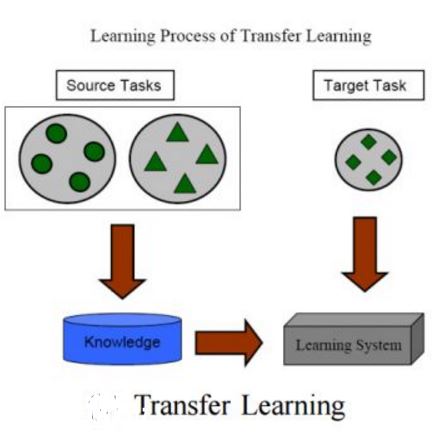
Modern computer systems are highly-configurable, with hundreds of configuration options interacting, resulting in enormous configuration space. As a result, optimizing performance goals (e.g., latency) in such systems is challenging. Worse, owing to evolving application requirements and user specifications, these systems face frequent uncertainties in their environments (e.g., hardware and workload change), making performance optimization even more challenging. Recently, transfer learning has been applied to address this problem by reusing knowledge from the offline configuration measurements of an old environment, aka, source to a new environment, aka, target. These approaches typically rely on predictive machine learning (ML) models to guide the search for finding interventions to optimize performance. However, previous empirical research showed that statistical models might perform poorly when the deployment environment changes because the independent and identically distributed (i.i.d.) assumption no longer holds. To address this issue, we propose Cameo -- a method that sidesteps these limitations by identifying invariant causal predictors under environmental changes, enabling the optimization process to operate on a reduced search space, leading to faster system performance optimization. We demonstrate significant performance improvements over the state-of-the-art optimization methods on five highly configurable computer systems, including three MLperf deep learning benchmark systems, a video analytics pipeline, and a database system, and studied the effectiveness in design explorations with different varieties and severity of environmental changes and show the scalability of our approach to colossal configuration spaces.
翻译:暂无翻译




相关内容



 微信扫码咨询专知VIP会员