

Private information retrieval (PIR) is a privacy setting that allows a user to download a required message from a set of messages stored in a system of databases without revealing the index of the required message to the databases. PIR was introduced under computational privacy guarantees, and is recently re-formulated to provide information-theoretic guarantees, resulting in \emph{information theoretic privacy}. Subsequently, many important variants of the basic PIR problem have been studied focusing on fundamental performance limits as well as achievable schemes. More recently, a variety of conceptual extensions of PIR have been introduced, such as, private set intersection (PSI), private set union (PSU), and private read-update-write (PRUW). Some of these extensions are mainly intended to solve the privacy issues that arise in distributed learning applications due to the extensive dependency of machine learning on users' private data. In this article, we first provide an introduction to basic PIR with examples, followed by a brief description of its immediate variants. We then provide a detailed discussion on the conceptual extensions of PIR, along with potential research directions.
翻译:暂无翻译




相关内容
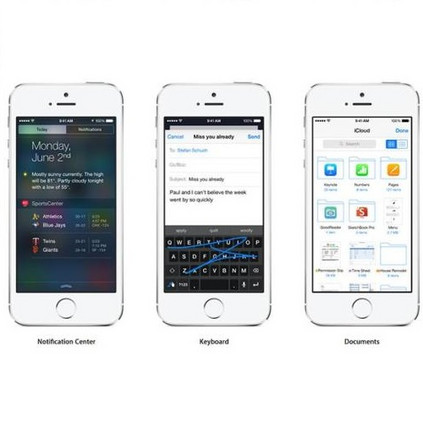
- Today (iOS and OS X): widgets for the Today view of Notification Center
- Share (iOS and OS X): post content to web services or share content with others
- Actions (iOS and OS X): app extensions to view or manipulate inside another app
- Photo Editing (iOS): edit a photo or video in Apple's Photos app with extensions from a third-party apps
- Finder Sync (OS X): remote file storage in the Finder with support for Finder content annotation
- Storage Provider (iOS): an interface between files inside an app and other apps on a user's device
- Custom Keyboard (iOS): system-wide alternative keyboards
Source: iOS 8 Extensions: Apple’s Plan for a Powerful App Ecosystem




 微信扫码咨询专知VIP会员