

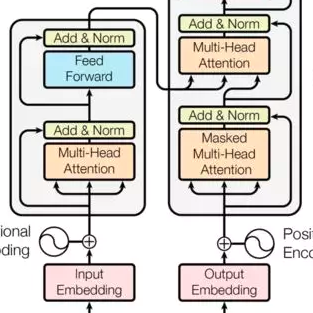
Electric vehicles (EVs) are key to sustainable mobility, yet their lithium-ion batteries (LIBs) degrade more rapidly under prolonged high states of charge (SOC). This can be mitigated by delaying full charging \ours until just before departure, which requires accurate prediction of user departure times. In this work, we propose Transformer-based real-time-to-event (TTE) model for accurate EV departure prediction. Our approach represents each day as a TTE sequence by discretizing time into grid-based tokens. Unlike previous methods primarily dependent on temporal dependency from historical patterns, our method leverages streaming contextual information to predict departures. Evaluation on a real-world study involving 93 users and passive smartphone data demonstrates that our method effectively captures irregular departure patterns within individual routines, outperforming baseline models. These results highlight the potential for practical deployment of the \ours algorithm and its contribution to sustainable transportation systems.
翻译:电动汽车(EVs)是实现可持续交通的关键,但其锂离子电池(LIBs)在长时间高荷电状态(SOC)下会加速老化。通过将满充延迟至出发前即刻进行,可有效缓解此问题,但这需要准确预测用户的出发时间。本研究提出一种基于Transformer的实时至事件(TTE)模型,用于精确预测电动汽车出发时间。该方法通过将时间离散化为基于网格的标记,将每一天表示为TTE序列。与以往主要依赖历史模式中时间依赖性的方法不同,本方法利用流式上下文信息来预测出发时间。在一项涉及93名用户和被动智能手机数据的真实世界研究中评估表明,本方法能有效捕捉个体日常中的不规则出发模式,性能优于基线模型。这些结果凸显了本算法在实际部署中的潜力及其对可持续交通系统的贡献。




相关内容


 微信扫码咨询专知VIP会员